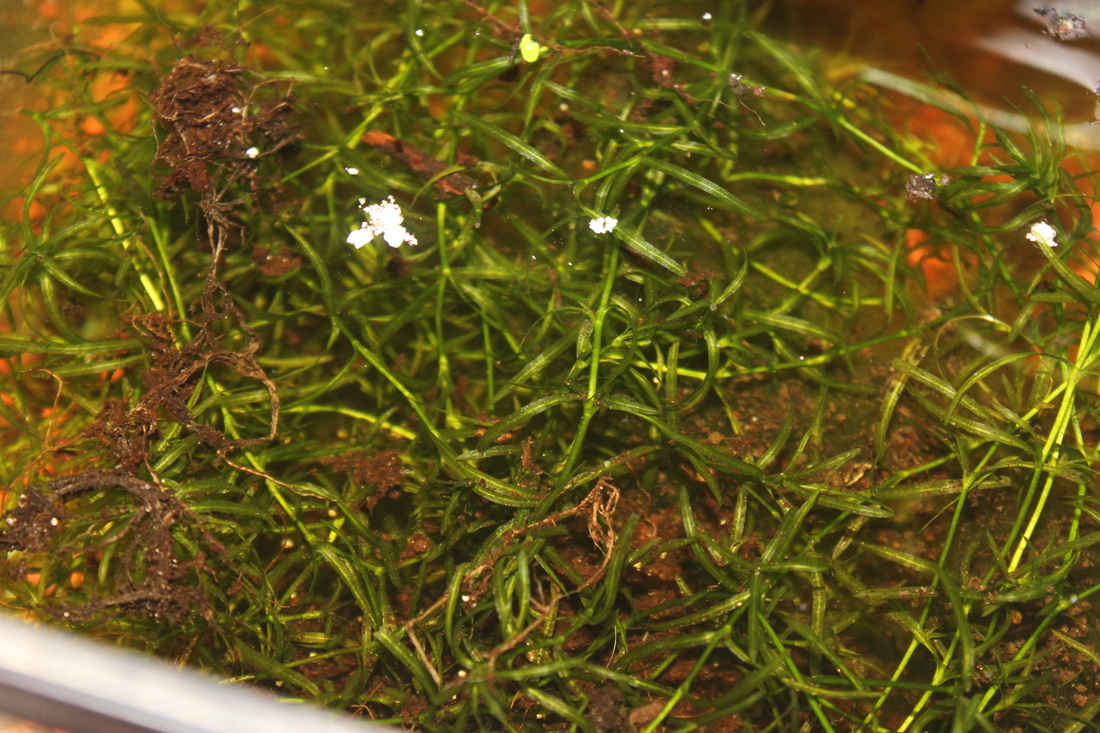
 My guppy grass (Najas guadalupensis). The dirt (potting soil) you see on top of the plants is what I put in a few days ago because I have not given these guppy grass any fertilizer in a while. Be careful not to kill the water plants with an overdose of fertilizer.
 The plants I just gave you are simple to keep. You need some water and soil.
If you do not put in a little soil in the container with water, the plants slowly die I think because of lack of nutrition.
The water in the container can be shallow or deep (I usually prefer shallow, 3 or more inches deep of water) and the soil can be an inch or less deep.
If you use fertilizer, do not use too much or you will burn/kill the water plants.
You can also just put in a fist full of potting soil that does not really make a layer of dirt on the bottom, but the guppy grass might need a layer of substrate or a synthetic sponge for it to grow it's roots into, the floating plants like the frog bit love to grow their roots all the way from the surface where they float down to the substrate.
After you got the plants in the container where you will let them grow, you should not shake their container or move the plants around while they start growing their roots. Just leave them alone for a few months (not exactly sure how long it takes) for them to grow roots into the soil in the container with water. Also, if the water evaporates, pour in more water, but do it slowly/gently for the plants.
Put the plastic shoe box or goldfish bowl (whatever you are keeping the plants in) in an area with some sunlight. More sunlight is better, except for the guppy grass (Scientific name: Najas guadalupensis) which will burn if kept in strong sunlight. I gave you just a small amount of the guppy grass so you might not be able to grow them. I will get some more of the guppy grass next time we see you. The guppy grass I read are sensitive to different water conditions from what they are used to growing in, such as when put it in a new tank. So the guppy grass might take a while to get started growing, but after it is doing alright and growing roots they will probably grow well.
The guppy grass can be kept with much less sunlight than the other plants I gave you, and the guppy grass I think could live with just artificial light.
If you do not put in a little soil in the container with water, the plants slowly die I think because of lack of nutrition.
The water in the container can be shallow or deep (I usually prefer shallow, 3 or more inches deep of water) and the soil can be an inch or less deep.
If you use fertilizer, do not use too much or you will burn/kill the water plants.
You can also just put in a fist full of potting soil that does not really make a layer of dirt on the bottom, but the guppy grass might need a layer of substrate or a synthetic sponge for it to grow it's roots into, the floating plants like the frog bit love to grow their roots all the way from the surface where they float down to the substrate.
After you got the plants in the container where you will let them grow, you should not shake their container or move the plants around while they start growing their roots. Just leave them alone for a few months (not exactly sure how long it takes) for them to grow roots into the soil in the container with water. Also, if the water evaporates, pour in more water, but do it slowly/gently for the plants.
Put the plastic shoe box or goldfish bowl (whatever you are keeping the plants in) in an area with some sunlight. More sunlight is better, except for the guppy grass (Scientific name: Najas guadalupensis) which will burn if kept in strong sunlight. I gave you just a small amount of the guppy grass so you might not be able to grow them. I will get some more of the guppy grass next time we see you. The guppy grass I read are sensitive to different water conditions from what they are used to growing in, such as when put it in a new tank. So the guppy grass might take a while to get started growing, but after it is doing alright and growing roots they will probably grow well.
The guppy grass can be kept with much less sunlight than the other plants I gave you, and the guppy grass I think could live with just artificial light.
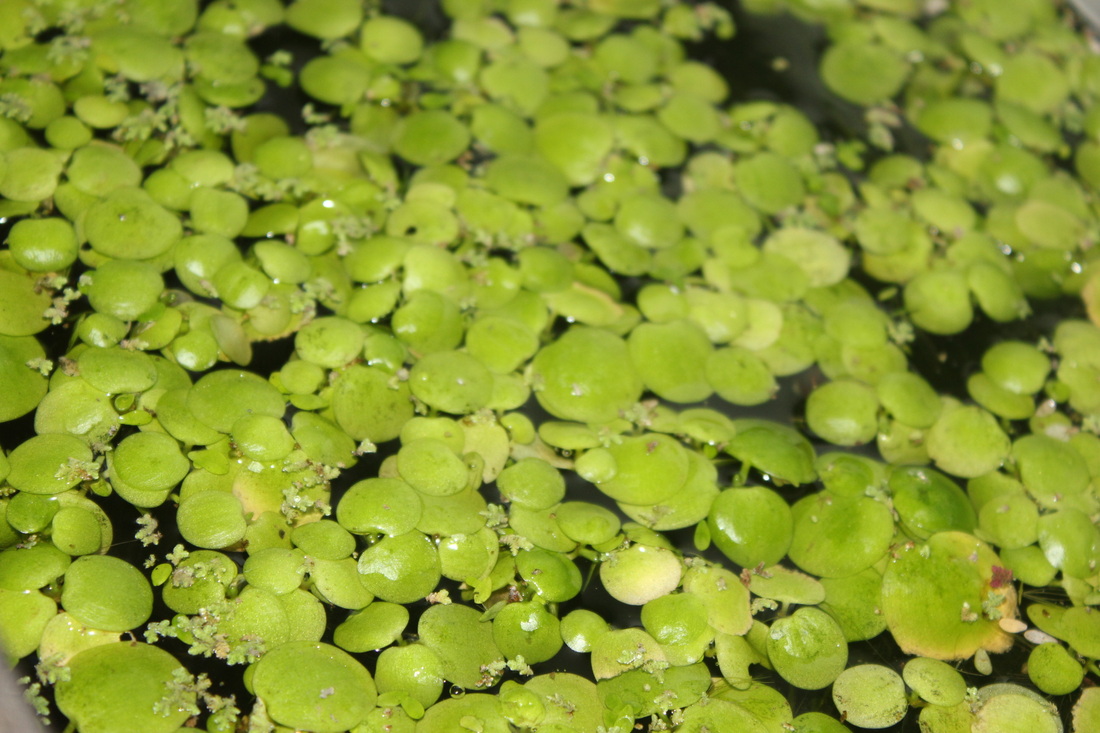 Frogbit (Limnobium laevigatum). If you give these some soil and a lot of sunlight and leave them alone in stagnant water, they will grow very well and fast with long strands of roots going down all the way to the bottom of the container filled with water. | 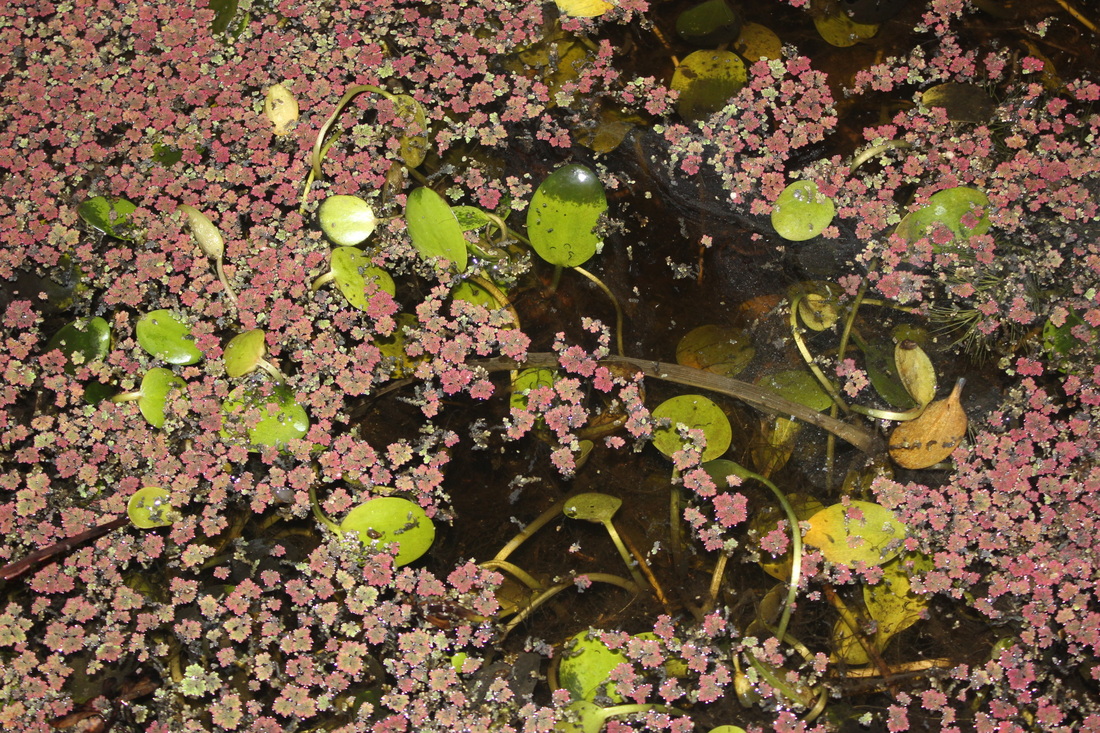 Fairy Moss and Frogbit. You can see some damage on the Frogbit's leaves that was caused by the cold or freezing water. I was told these Frogbits are not able to go through winters, but these Frogbits in this particular plastic bin on our back porch have only died back a little. |
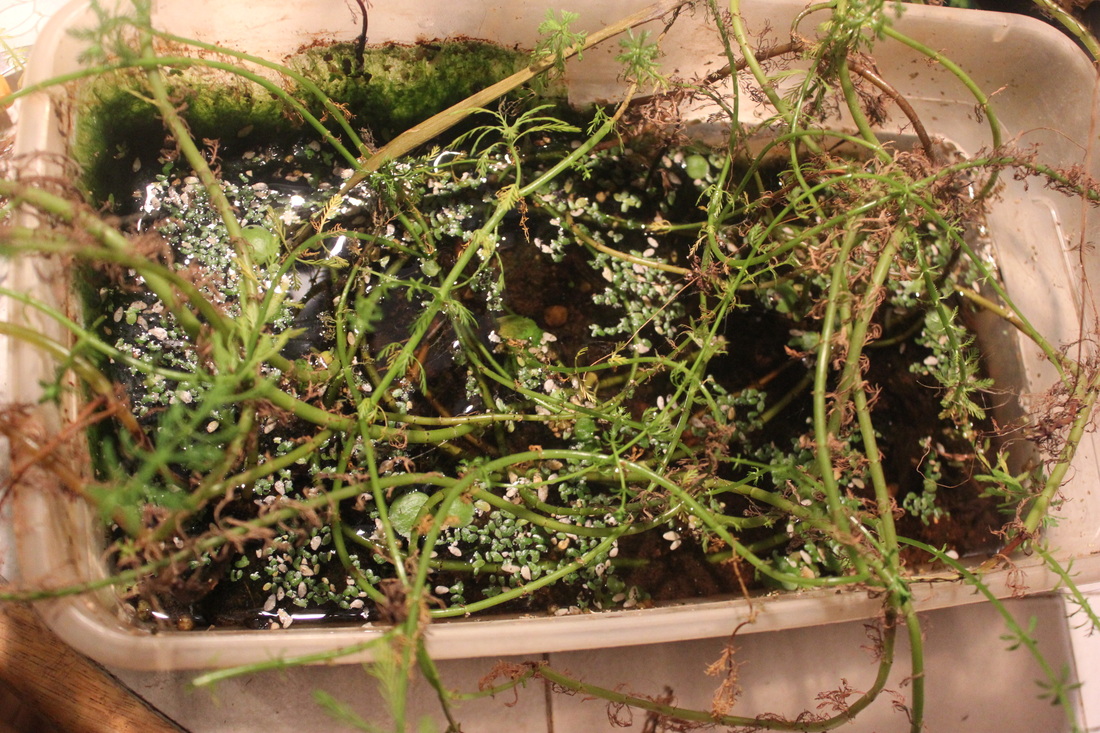
Some Parrot Feather plants and floating Duck Weed plants (Lemna species).
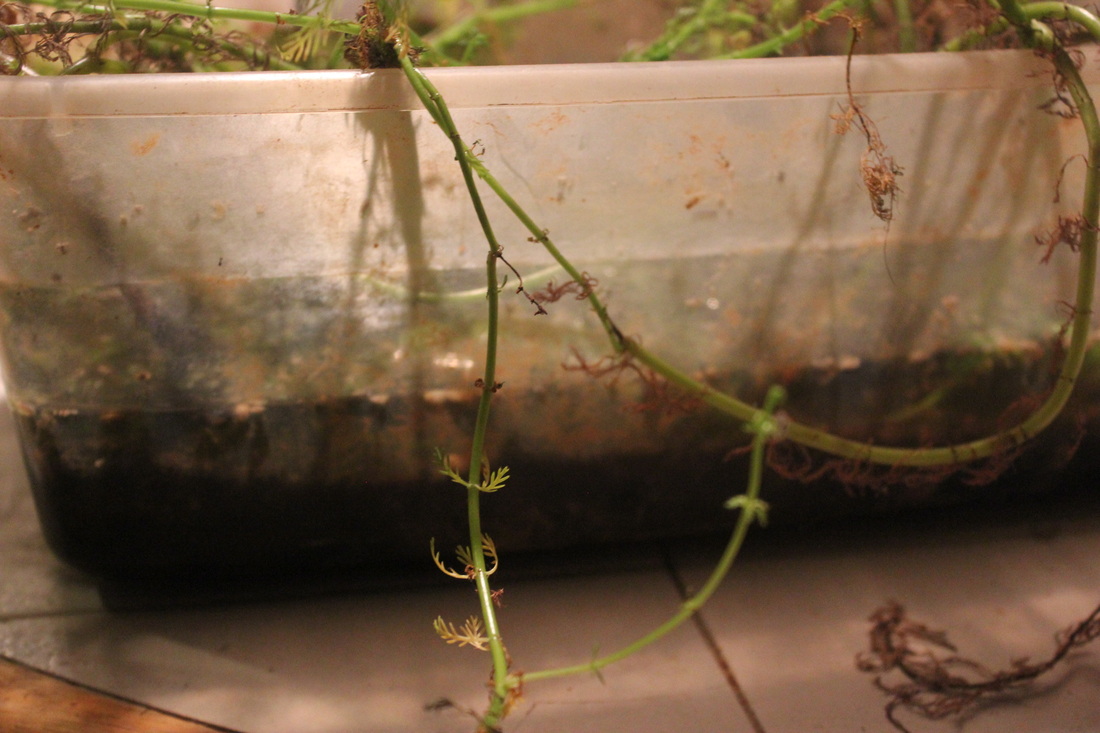
You can see how shallow the water is, and the plants grow fine like that.
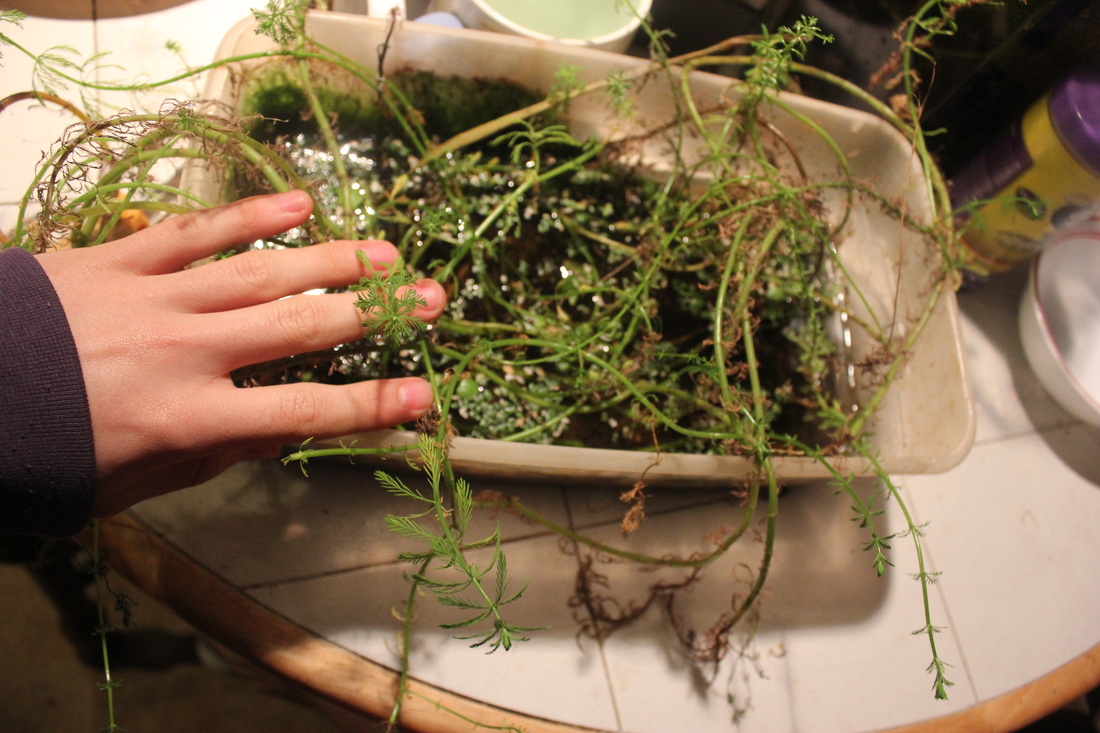
To give you an idea on how big this container is, that is my left hand touching the corner edge of the container.
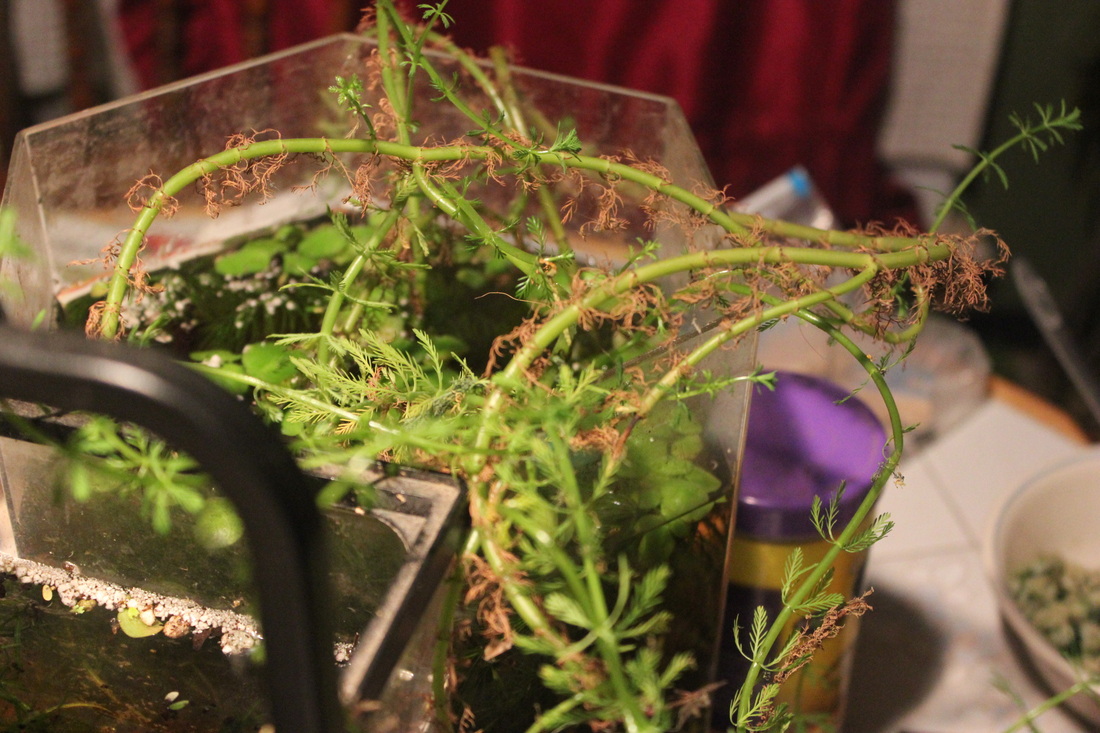
Another picture of another container!
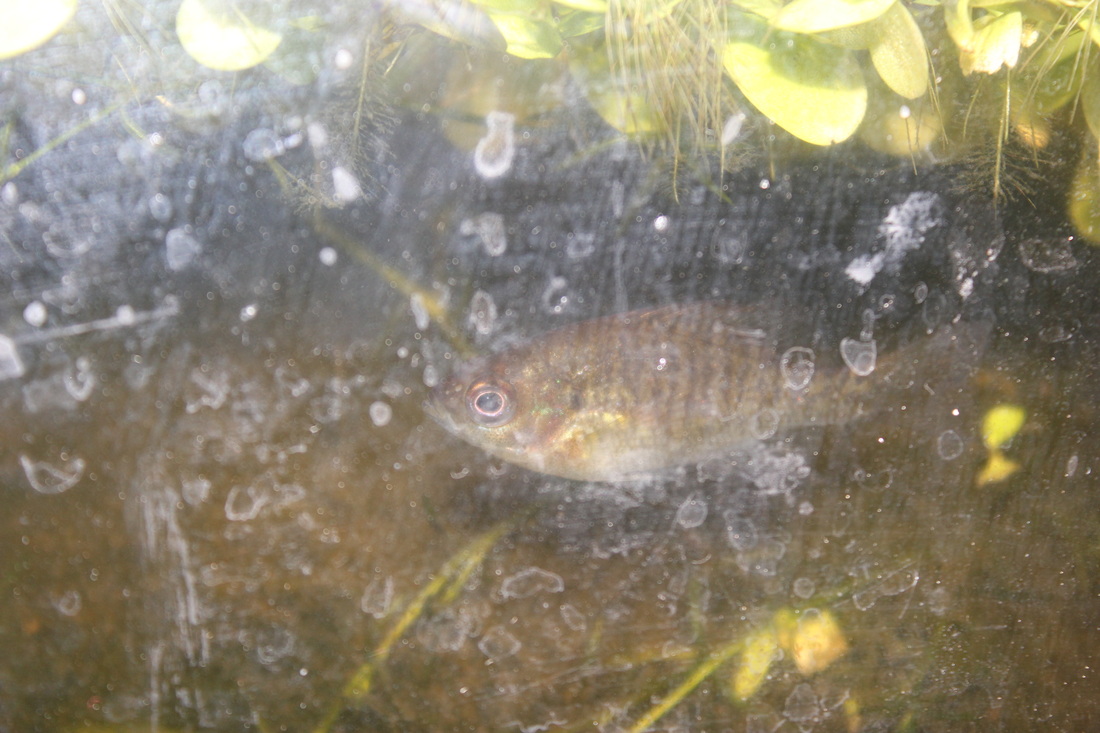
Blue gill (?) juvenile in a small aquarium with frogbit. The frogbit on the top in this photo have very short roots. If the frogbit is cared for better by letting it have stagnant water and a little fertilizer, the frogbit would grow very well with big leaves and long roots.
 RSS Feed
