Insect_raiser
  • Home
  • Blog
  • Gallery
    • Mantii
    • Cockroaches >
      • Lobster Cockroach (Nauphoeta cinerea)
    • Spiders >
      • Daring Jumping Spider (Phidippus audax)
      • Orchard Spider (Leucauge venusta)
      • Black and Yellow Garden Spider (Argiope aurantia)
    • Fruit Flies >
      • (Drosophila melanogaster)
    • Springtails >
      • Collembola sp. "Tropical Variety"
    • Assassin Bugs >
      • Wheel Bug (Arilus cristatus)
    • Turtles
  • Videos
    • Mantids
    • Cockroach
    • Jumping Spiders
  • Mantis Care
    • Gambian Spotted Eye Flower Mantis (Pseudoharpax virescens)
  • Pictures
  • Links
  • Mantises For Sale

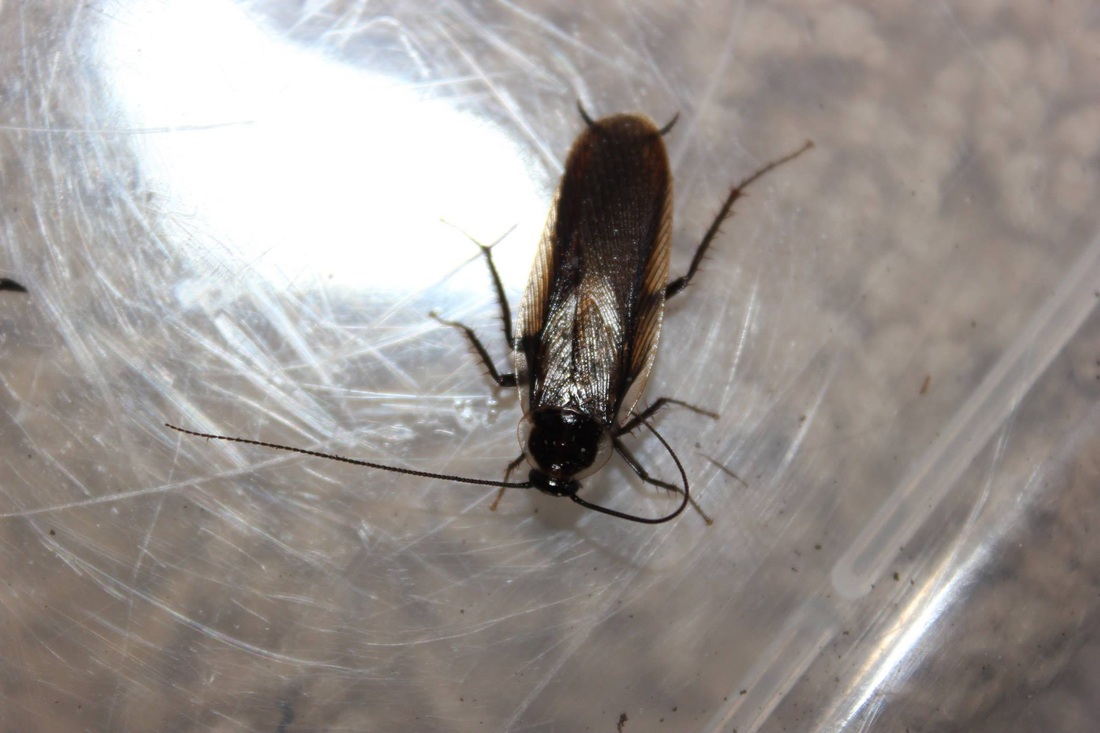
Unknown species of Parcoblatta adult male.  Median segments like Parcoblatta caudelli.

Caught from Wake County (?), North Carolina

More pictures of this male here

Blaberus cf. matogrossensis and Byrsotria sp. "Cuba" and Byrsotria fumigata from Roachcrossing.com

5/27/2014

0 Comments

 
A few months ago I ordered several species of roaches from Kyle Kandilian (roachcrossing.com).  He is very nice person.  He was happy to replace one species that died during shipping and one species he forgot to send when I told him about what happened (he paid for the shipping!).     

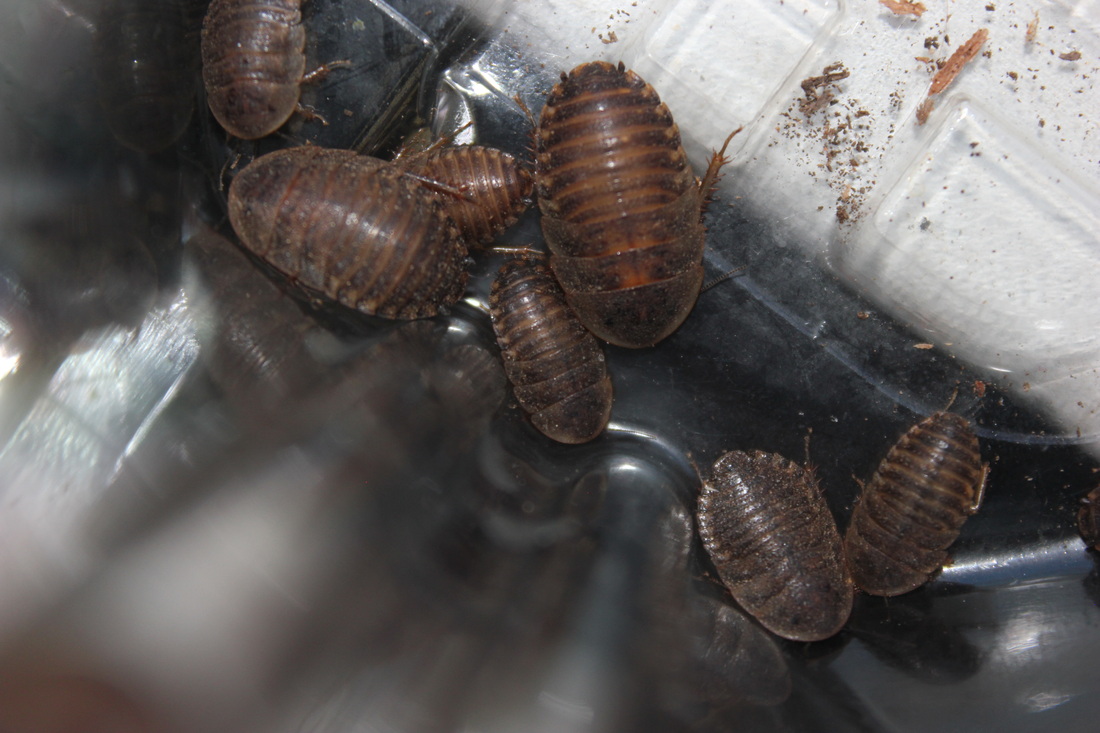
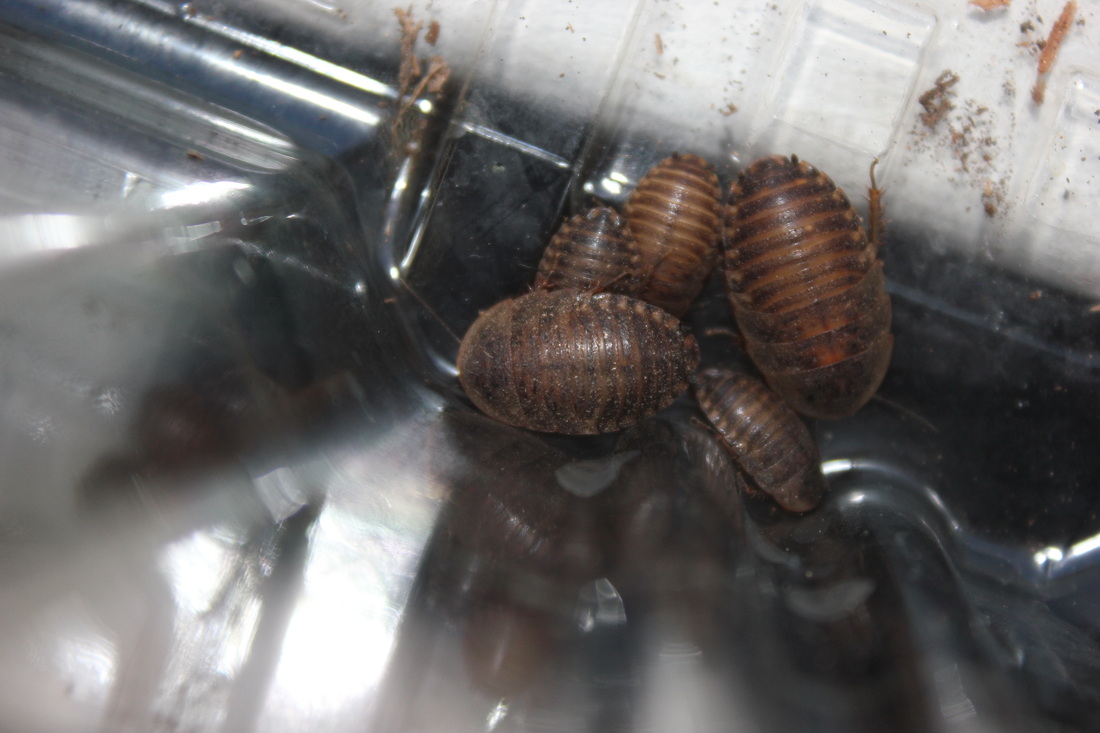
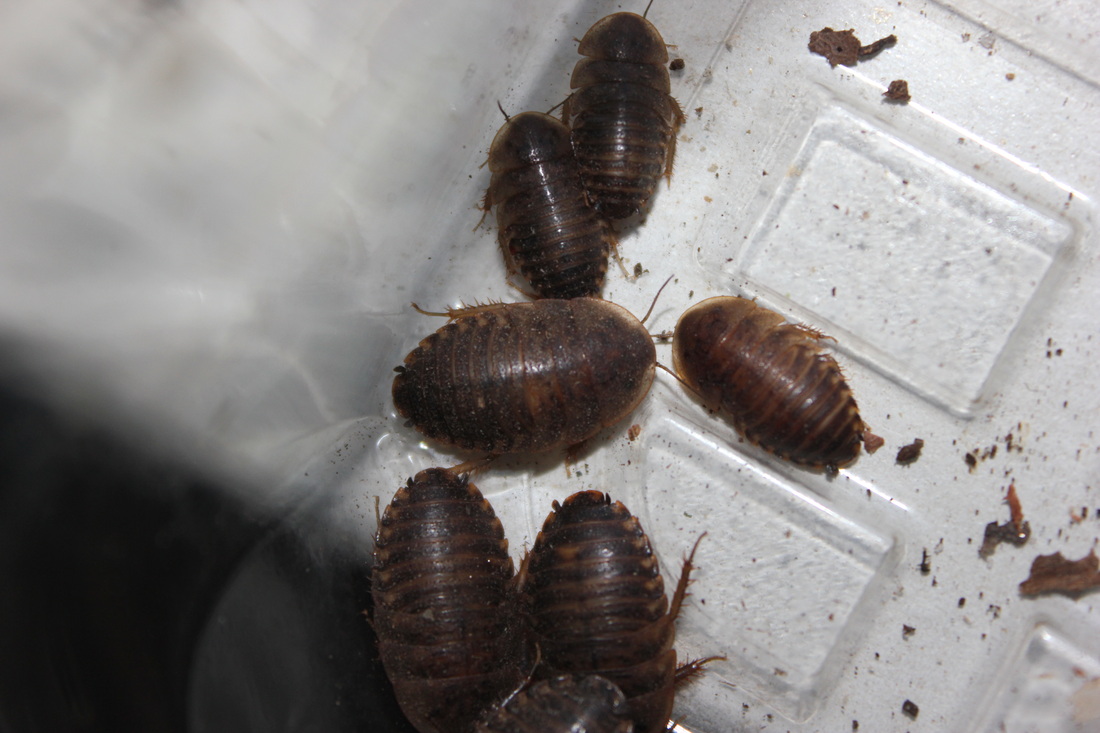
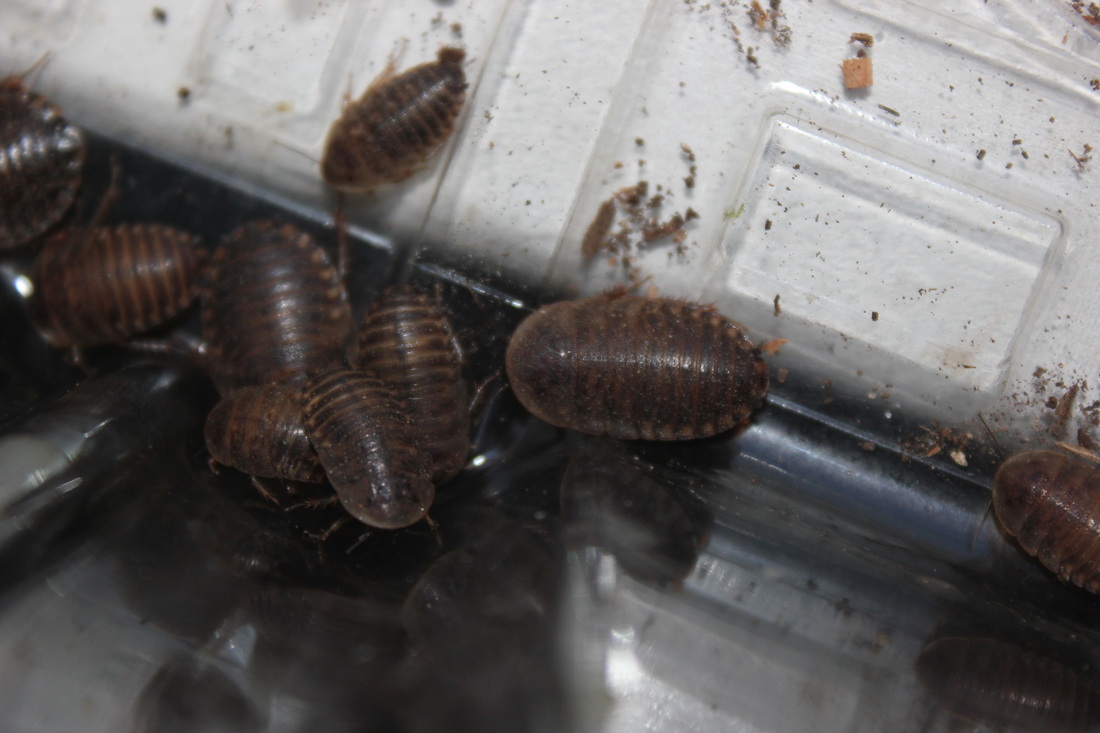
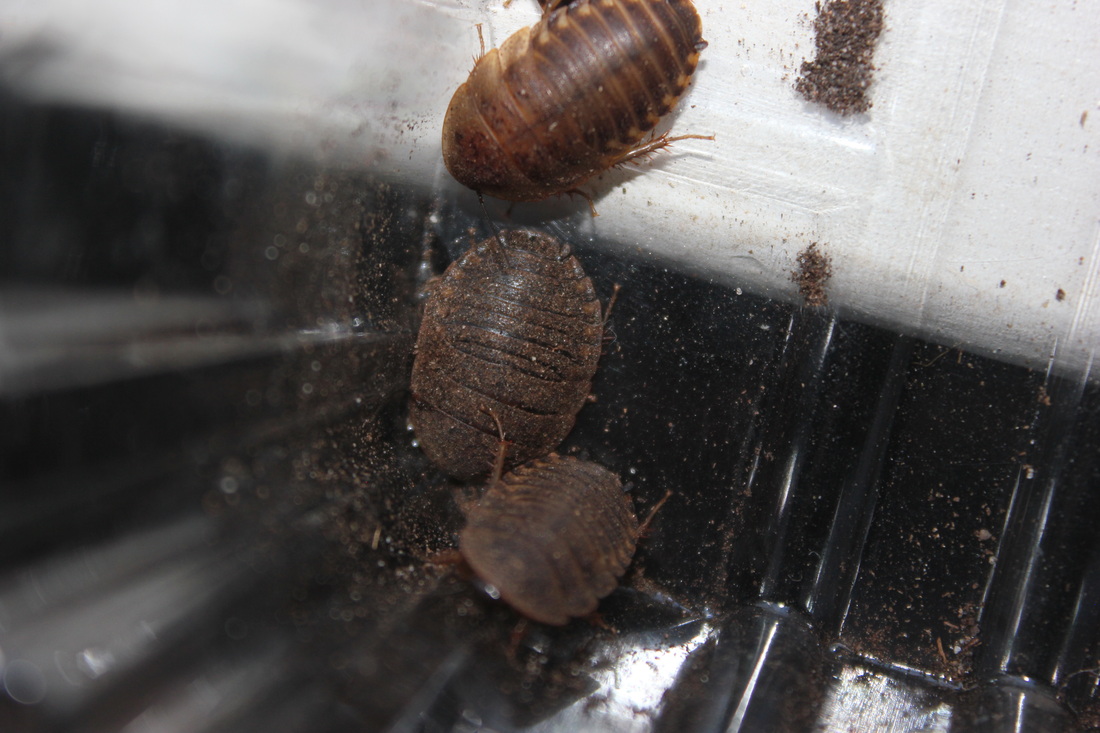
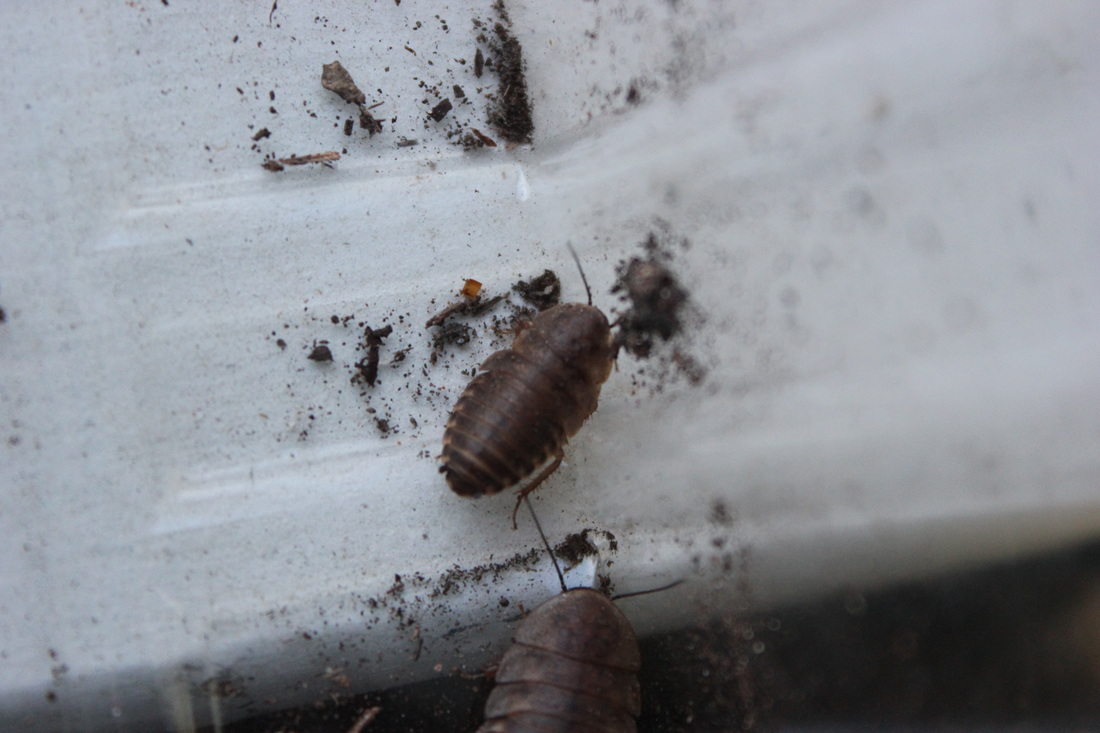
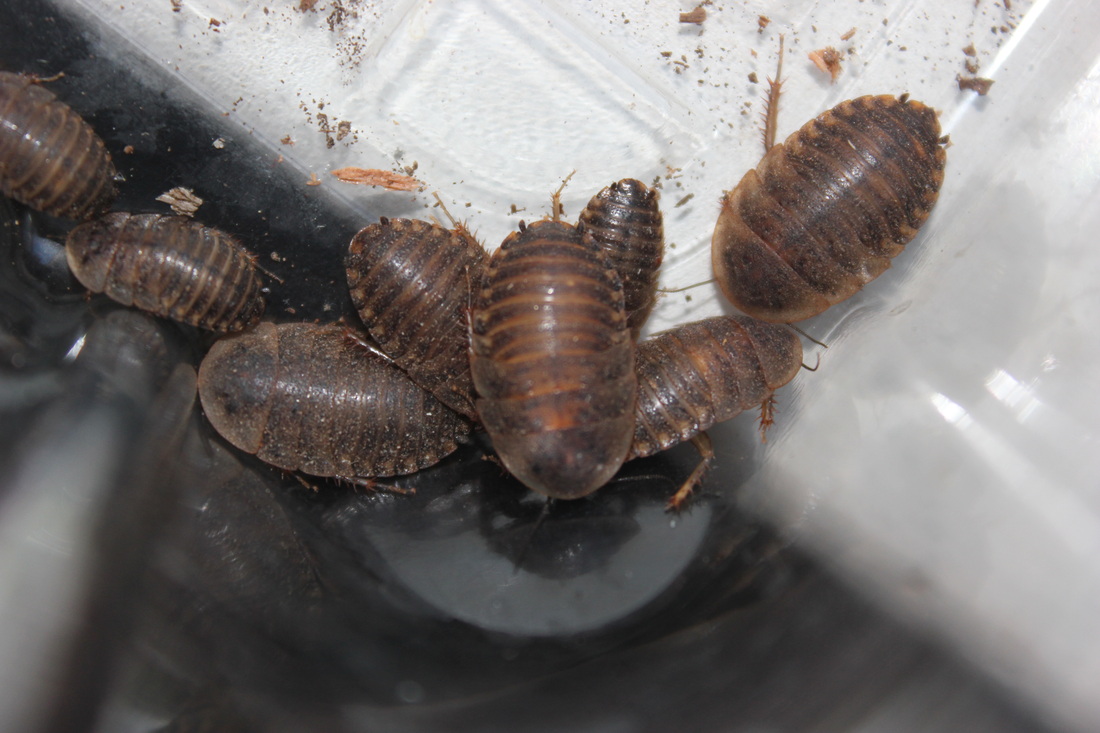
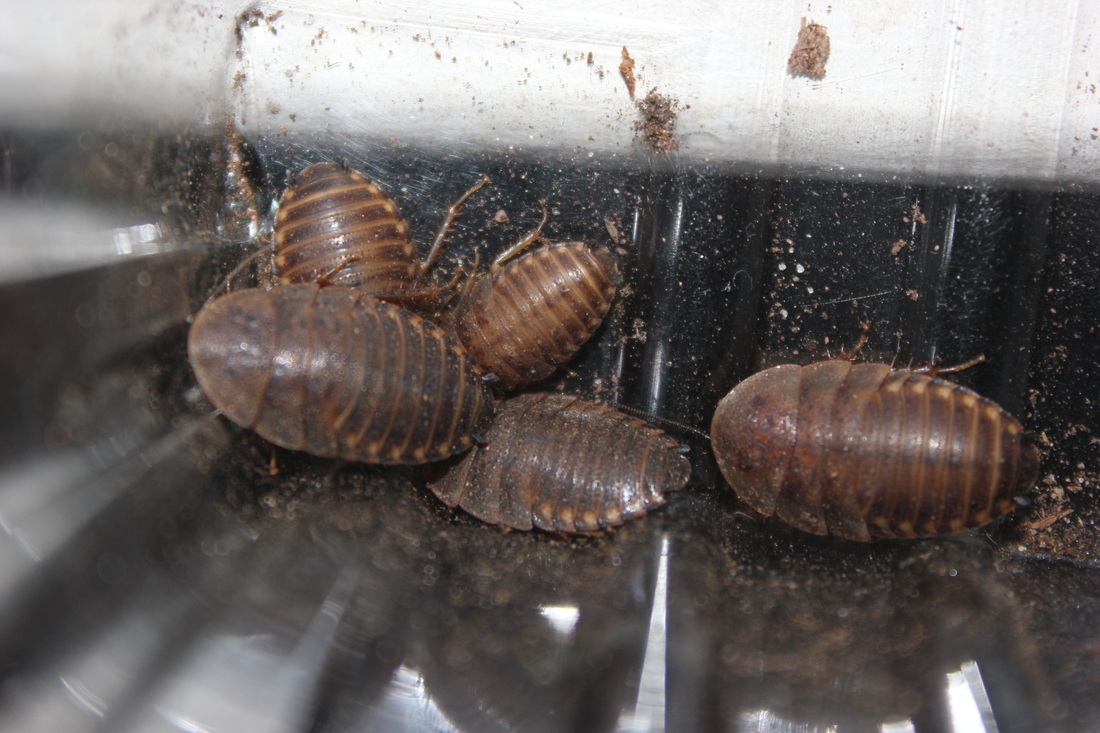
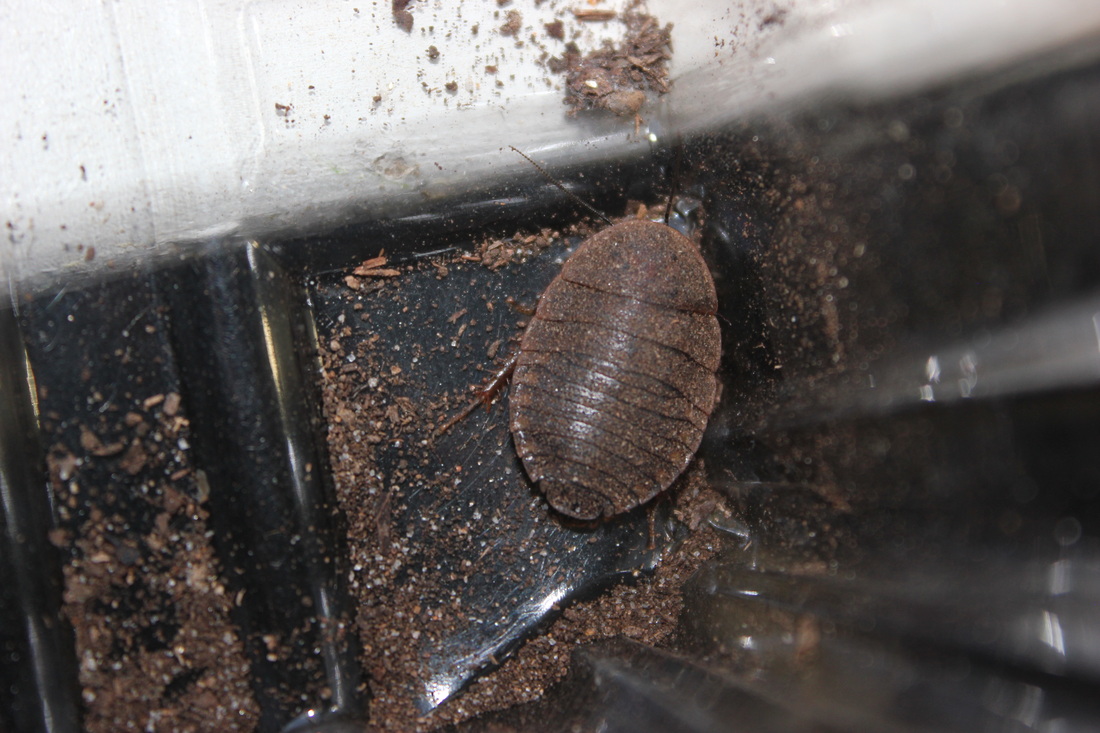
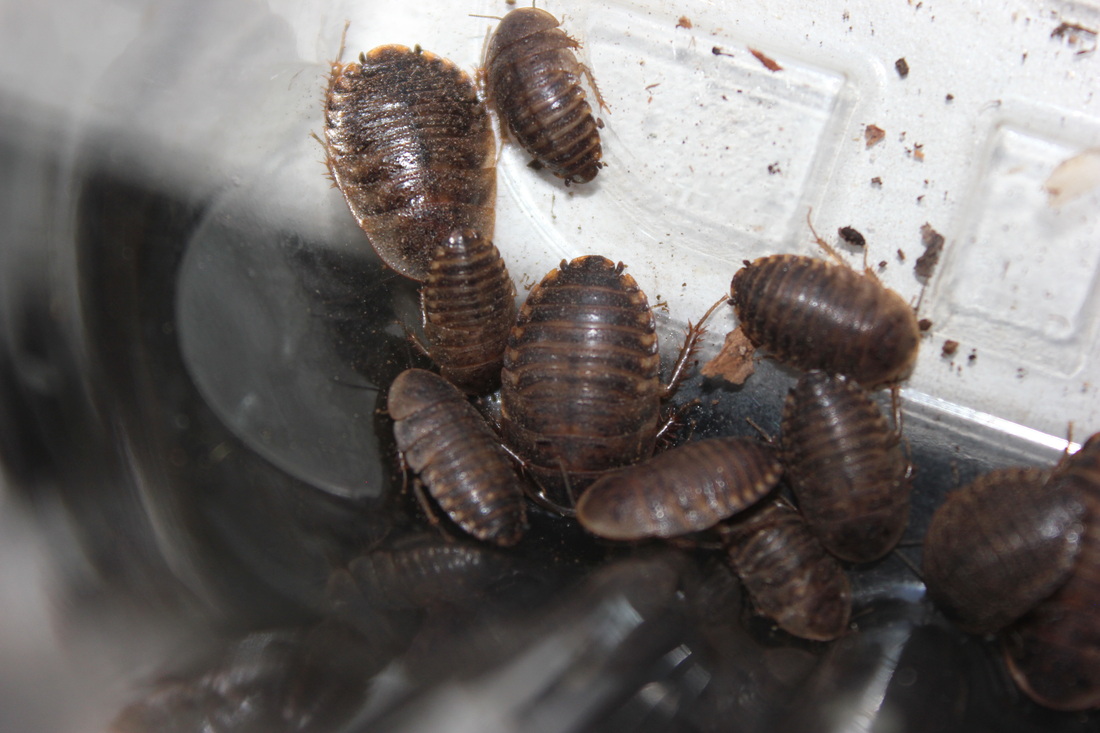
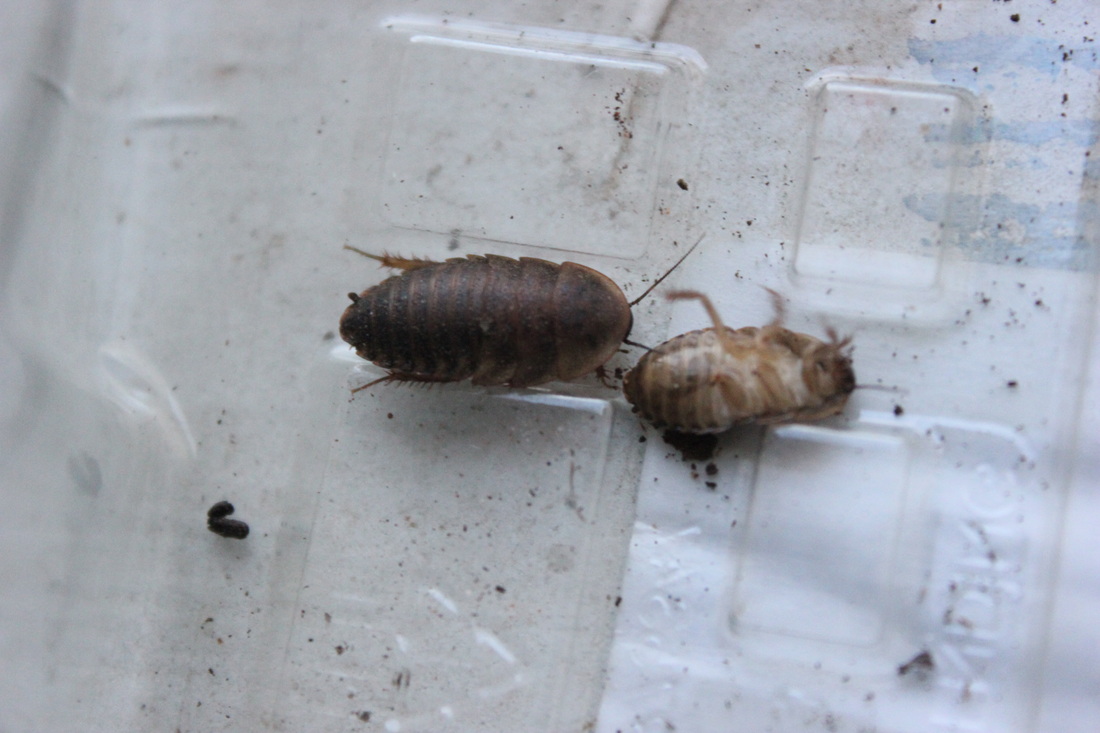
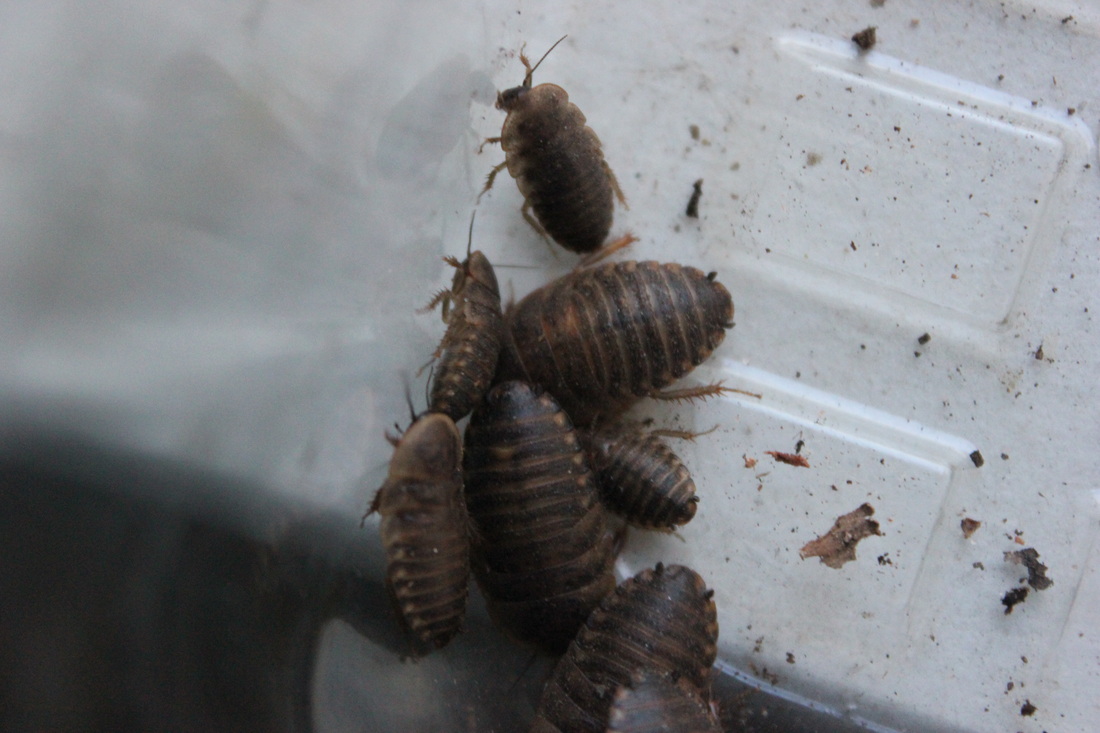
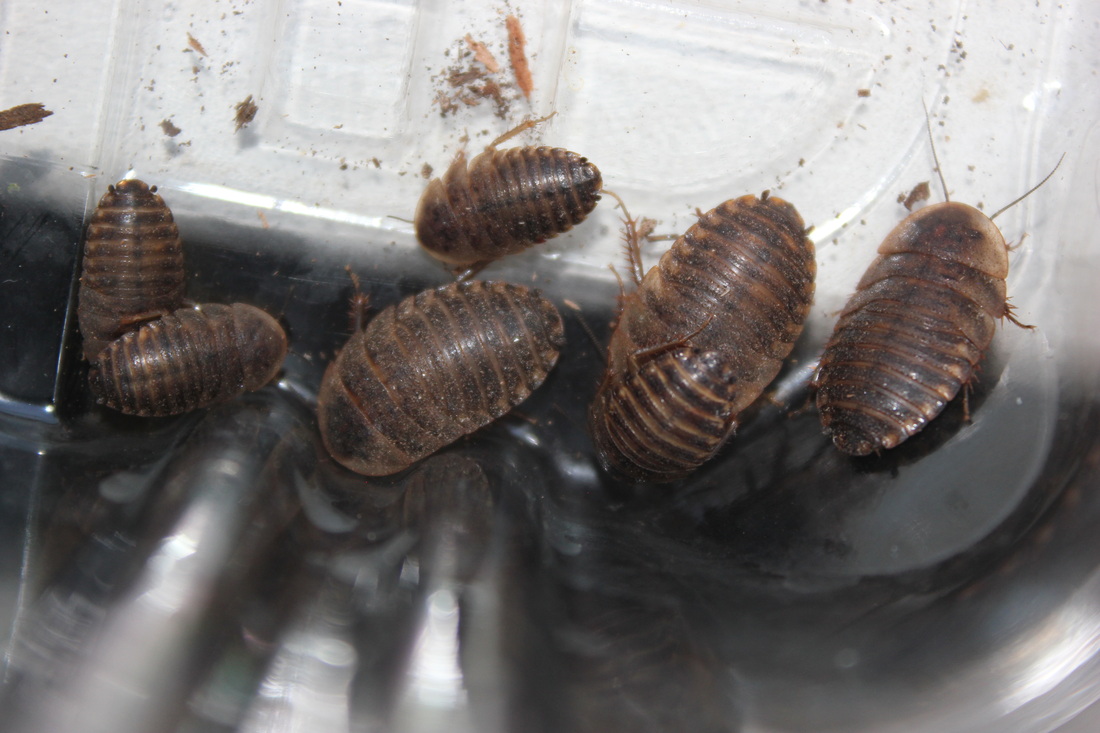
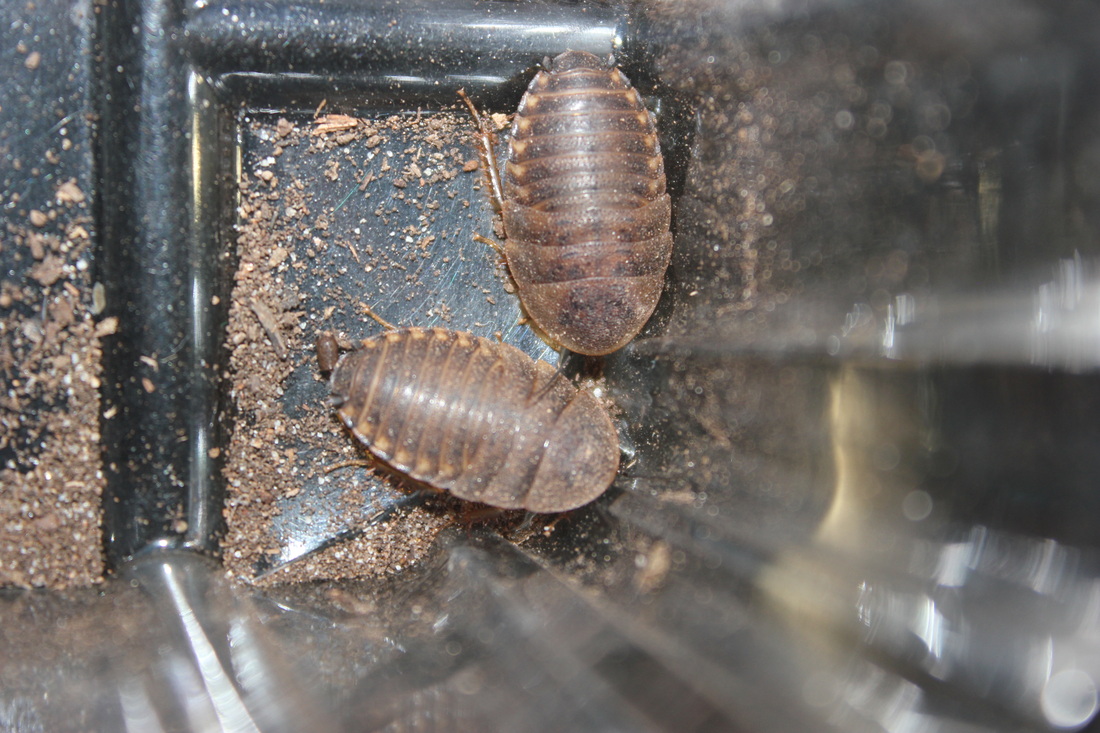
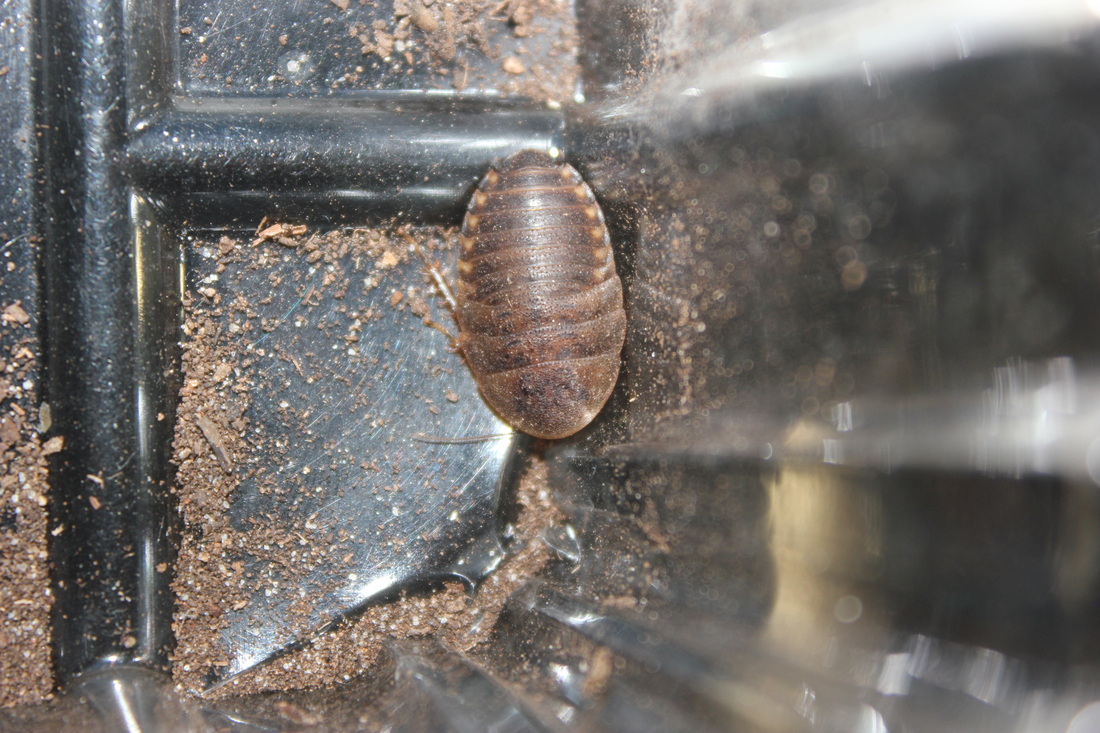
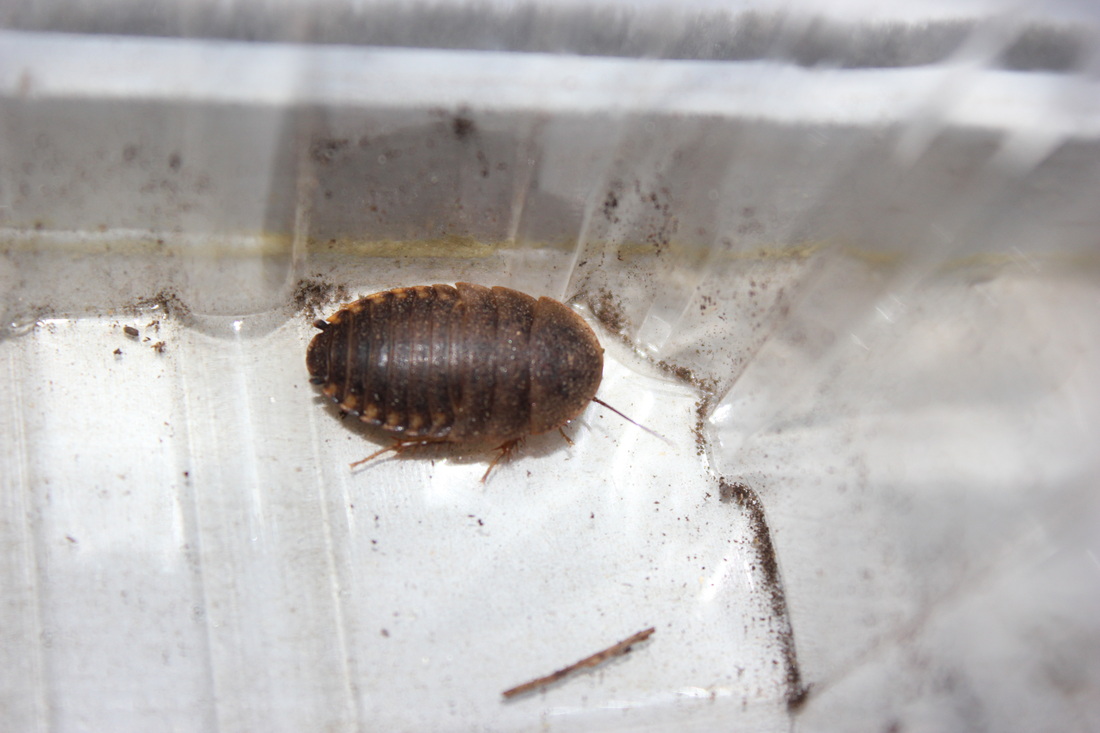
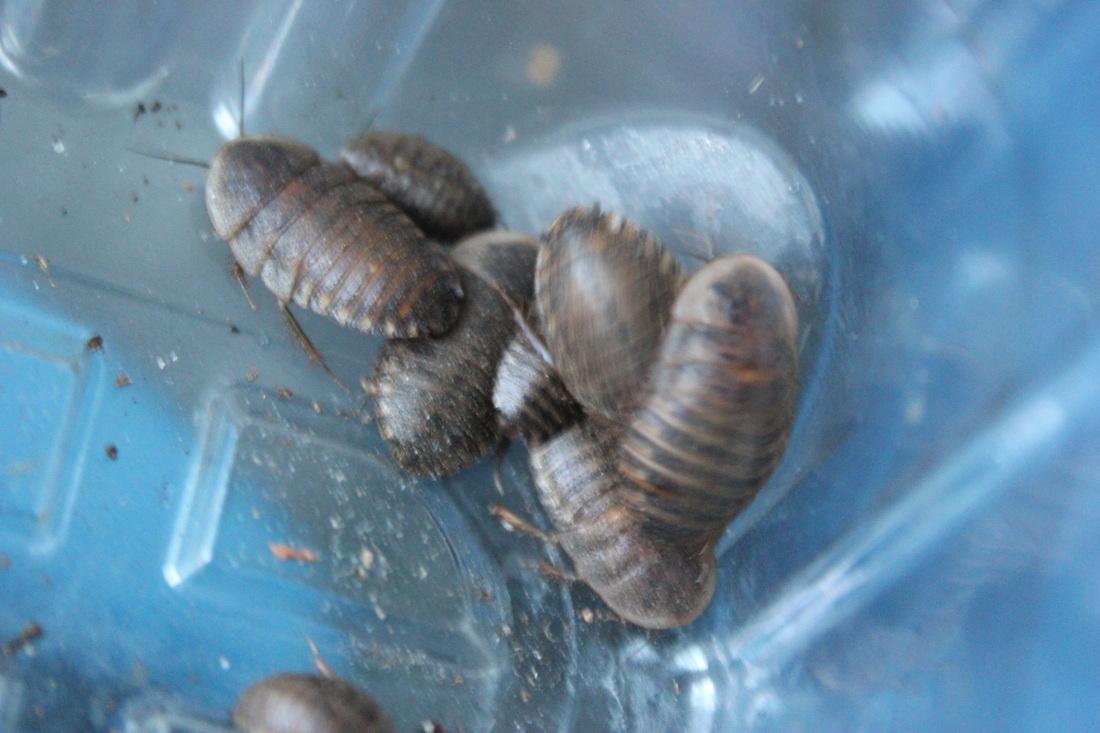
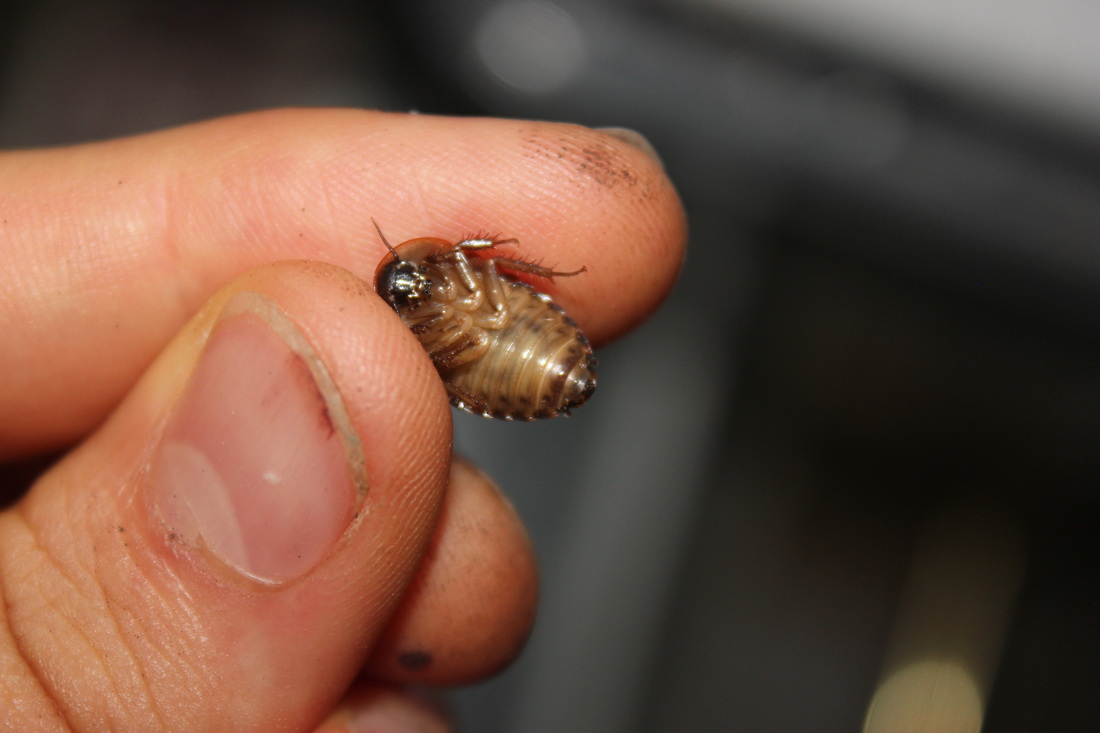
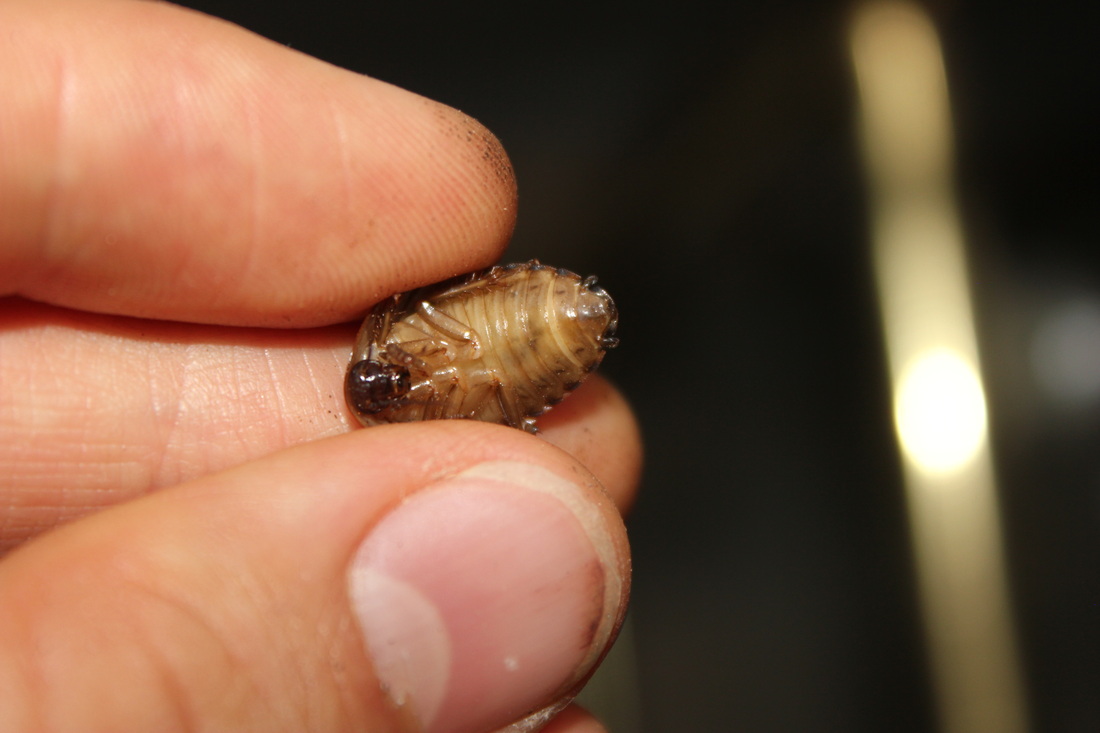
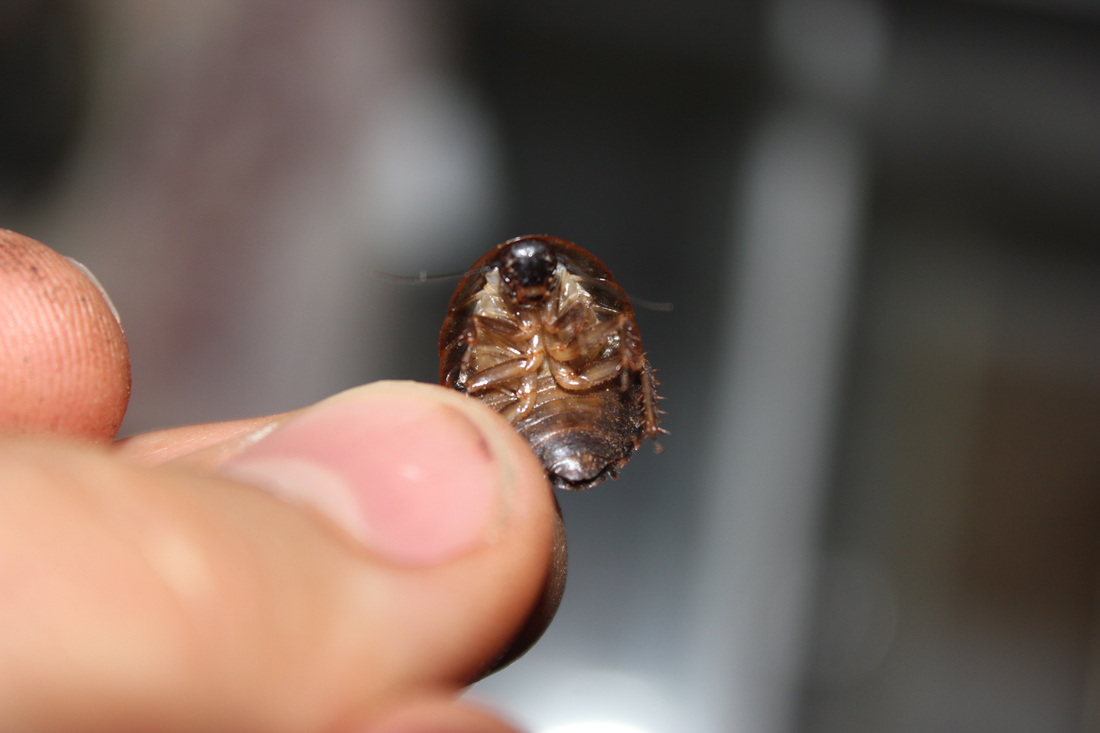
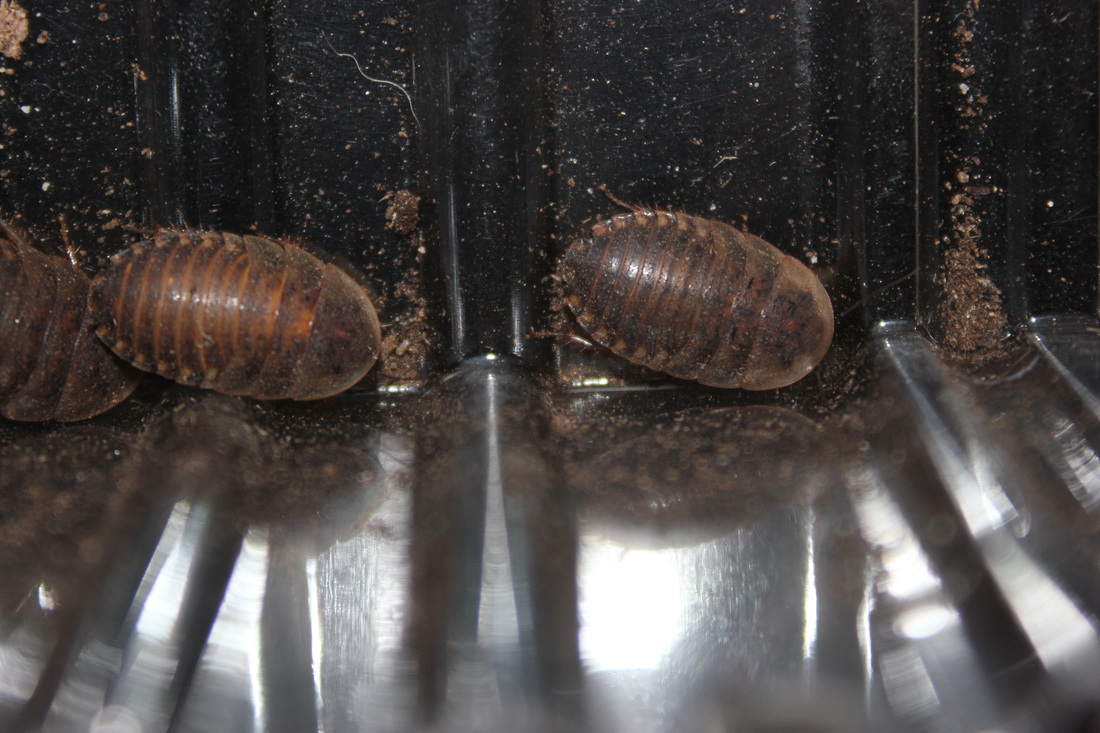
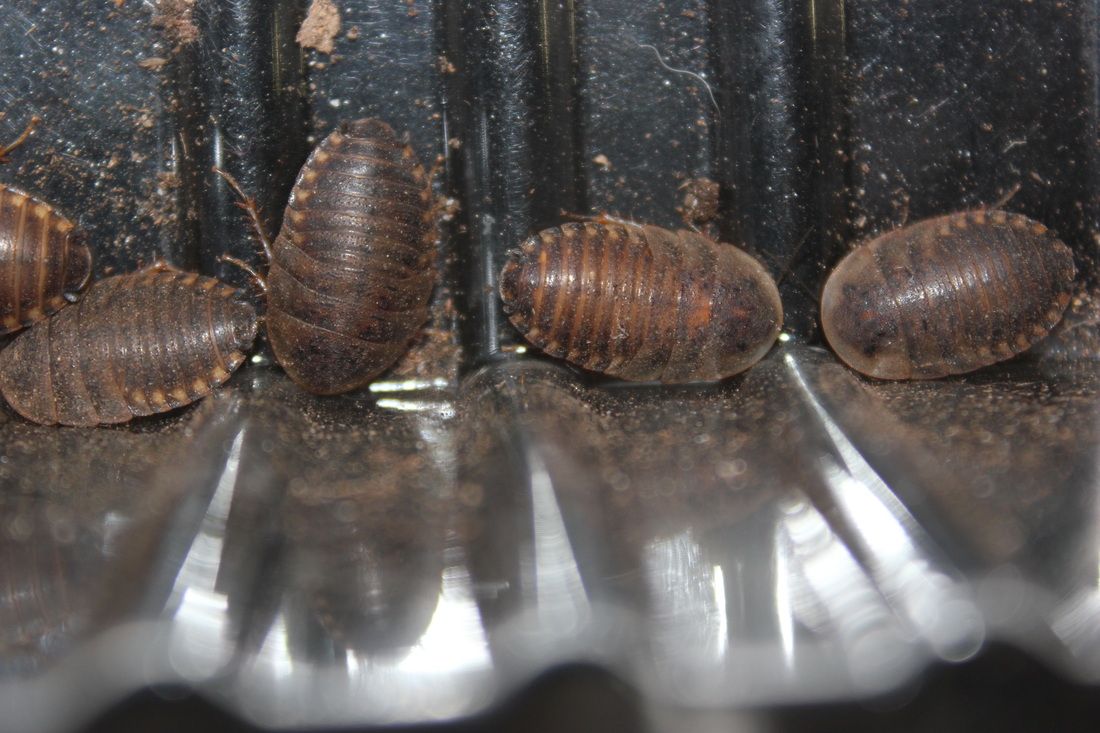
Today I tried to compare the Byrsotria sp. "Cuba" with Byrsotria fumigata to see if there are any differences.  I did not look very hard so I will keep looking for differences in the future.  But for now they look very similar to me.  

The Byrsotria sp. "Cuba" of similar size (and so probably similar age) to the Byrsotria fumigata have more of a white margin on their pronotum than the Byrsotria fumigata of similar size (and probably similar age).  But Byrsotria sp. "Cuba" could possibly have just a little white margin like Byrsotria fumigata so this might not be a good way to tell them apart.

Pictures:

Byrsotria sp. "Cuba" nymphs
Picture

Underside of Byrsotria sp. "Cuba" nymph
Picture

Underside of Byrsotria fumigata nymph
Picture

Underside of another, larger Byrsotria fumigata nymph
Picture

Byrsotria sp. "Cuba" nymphs

Picture

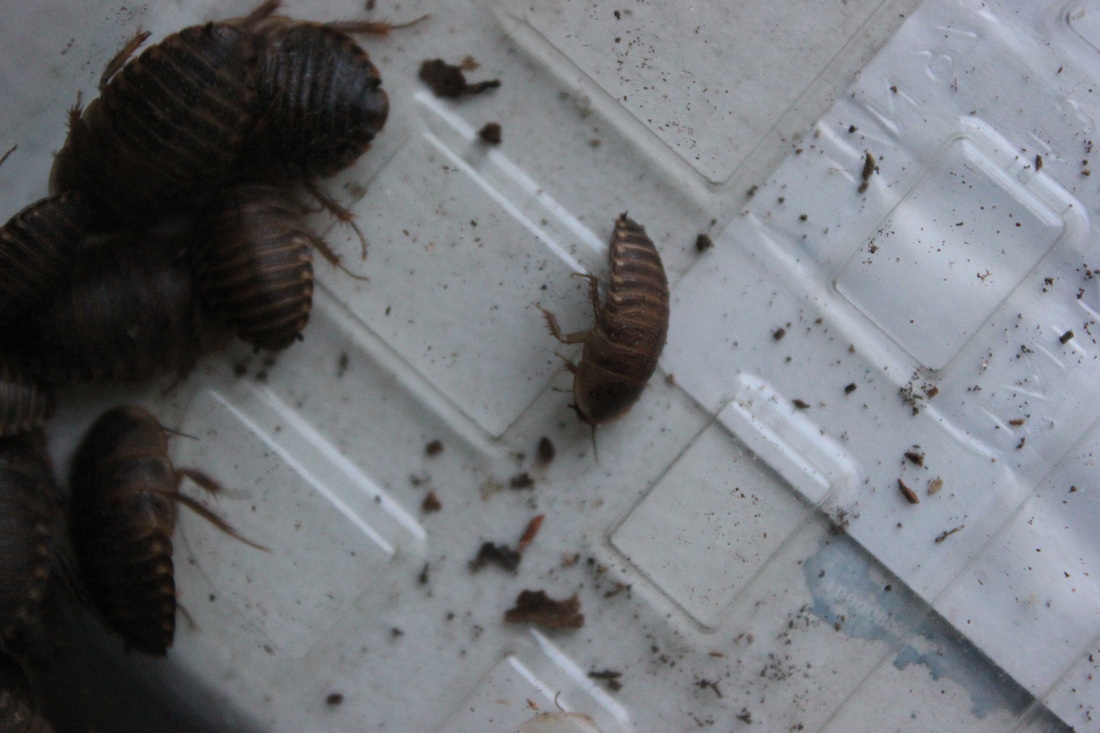
Byrsotria sp. "Cuba" 

In real life when I looked at the little guy in the middle I think it looked similar to the Byrsotria fumigata because of the coloration and just a little bit of white margin on the pronotum.
Picture

Byrsotria sp. "Cuba"

Picture

Byrsotria sp. "Cuba"

Picture

Byrsotria sp. "Cuba"

Picture

Byrsotria sp. "Cuba"

Picture

Byrsotria fumigata

Picture

Byrsotria fumigata

Picture

Byrsotria sp. "Cuba"

Picture

Byrsotria fumigata

Picture

Male? Byrsotria fumigata nymph 

Picture

Byrsotira sp. "Cuba"

Picture

Byrsotria sp. "Cuba"

Picture

Byrsotria sp. "Cuba"

Picture

Byrsotria sp. "Cuba"

Picture

Two Byrsotria sp. "Cuba" and the one on the farthest left is Byrsotria fumigata
Picture

Two Byrsotria sp. "Cuba" on the right side and the other two on the left side are Byrsotria fumigata 
Picture

Byrsotria fumigata nymphs

Picture

Byrsotria fumigata

Picture

Byrstoria fumigata

Picture
0 Comments

Rhyparobia sp. "Malaysia"

5/27/2014

0 Comments


Pictures

0 Comments

Parcoblatta virginica 

5/26/2014

0 Comments

 
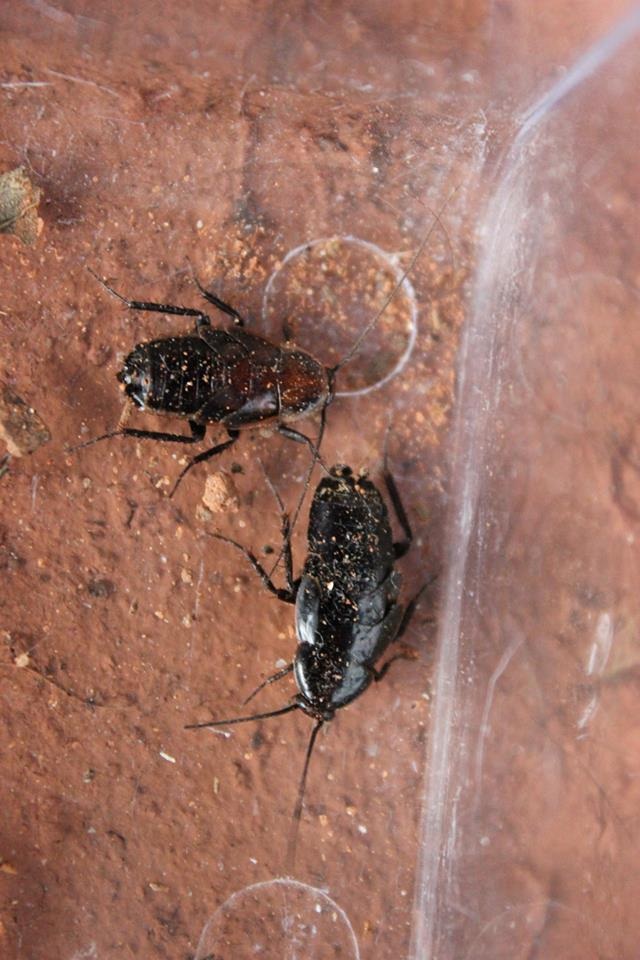
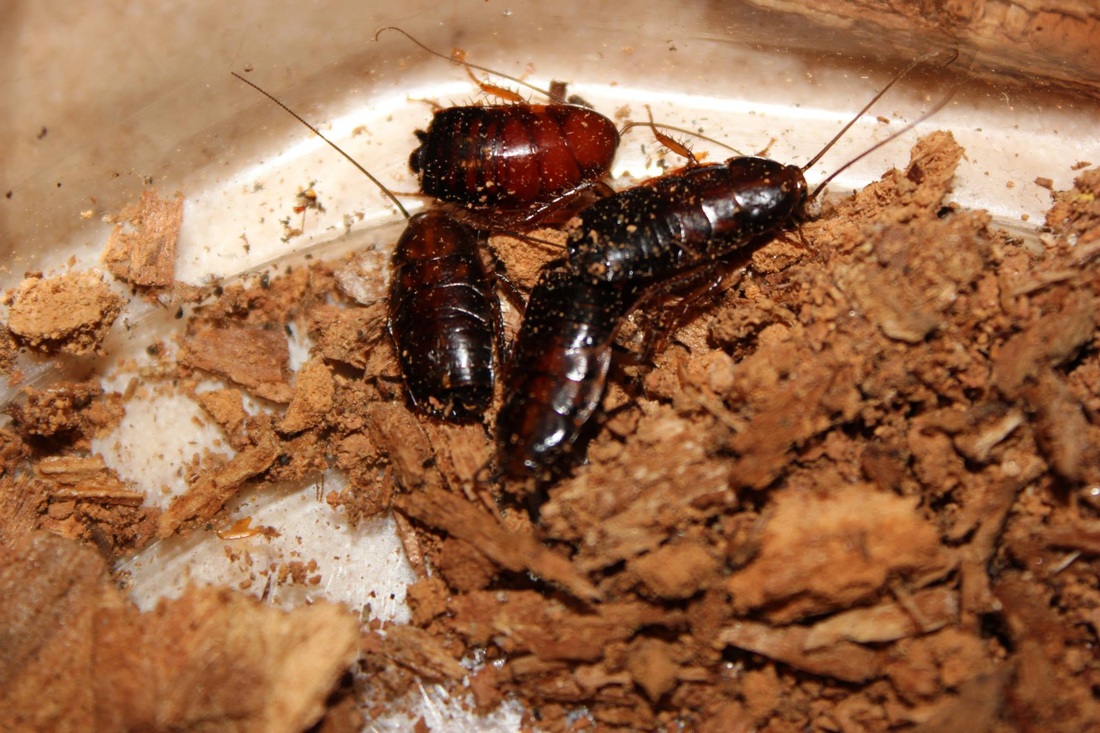
Here are pictures and a video I took today of a few of my P. virginica.  P. virginica are easy to keep.  They will chew on my skin and so could be aggressive and eat other roaches while molting.

Video of Parcoblatta virginica adults

0 Comments

Parcoblatta lata and Parcoblatta divisa Pictures North Carolina

5/26/2014

0 Comments

 
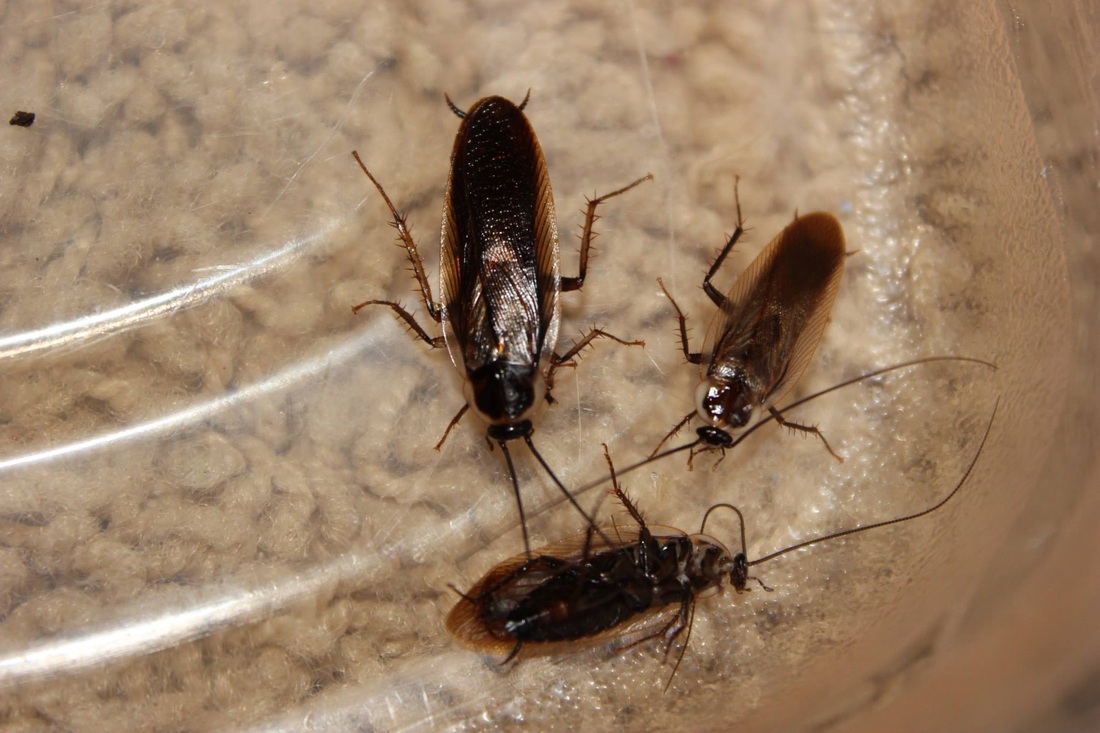
Here are some pictures of Parcoblatta divisa and Parcoblatta lata I have caught in North Carolina.  Those two species were quite common when I looked for them.  They were inside old pine wood stumps that you could brake with your bare hands.  Also I found many under bark of not so old pine stumps.  I found some under the bark of dead pine tree trunks up so high I could just barely reach the roaches even if I used a long stick (I used the long stick to peel the bark off so that the roaches would jump or fall to the ground).  Most of the P. divisa I had died and many P. lata also died probably because of my lack of care.  They might need a little dry conditions to live well.  With the P. divisa and P. lata I found one type of roaches that could be P. divisa, but is slightly different.  I am wondering if it is a different species.    You can see pictures of these species and also some other animals here:https://www.facebook.com/media/set/?set=a.1477415722480719.1073741883.100006369157688&&l=7eba8b1567
https://www.facebook.com/media/set/?set=a.1474331186122506.1073741879.100006369157688&&l=5800033dee
https://www.facebook.com/media/set/?set=a.1465356940353264.1073741872.100006369157688&&l=e9926a5a7c


Male nymph P. divisa

Picture

Adult male P. divisa

Picture

Nymphs of P. lata

Picture

Unknown species of roach (Is Parcoblatta pennsylvanica)

I have a friend in Alabama that has caught roaches that seem like the same type as these unknown roaches I am catching.  He thought they could be a variation of P. pennsylvanica.  But after one of his males molted to adult he checked the median segment and he says they are like P. divisa.  I am not so sure if they are the same species.  I have not checked the median segment of the males of my unknown roaches.  

I have one female of the unknown roaches.  Most of the P. lata and P. divisa and these unknown roaches were male.  I sexed them by looking at the underside of their abdomens.  All of the males of the unknown roaches are dead now.  The one female is energetic still though.  She was with the males for sometime, so I think she is mated.  I was unable to see if the male of the unknown species would try to mate with the females of the P. divisa because the males of the unknown species died before any females of the P. divisa became adult.  I have not yet got a female P. divisa to adult (they died and they were not very close to becoming adult when the males of the unknown species died).  

She laid one ootheca.  I am not all the way certain because I did not see the ootheca and I could not find it, but she got much more skinny, so she had to have laid an ootheca.  I am keeping the container carefully to not shake the dirt that could cover the ootheca I could not find.  I moved the female to another smaller container so that I could easily find the ootheca if she laid another.  

As nymphs these roaches were fast which made it hard to photograph them and their legs would brake off easily if I tried to hold them.  The adult males would fly.

Here are pictures of these roaches and comparison of the unknown roaches and P. divisa.  I am sorry for these bad photos: https://www.facebook.com/media/set/?set=a.1490314724524152.1073741885.100006369157688&&l=59e3ef4c52

Adult female

Picture

Adult male

Picture

Male sub-adult nymph and P. divisa sub-adult nymph on top

Picture

Pre-sub-adults nymphs with one P. lata nymph on top

Picture

One of the unknown roaches adult male and two adult male P. divisa

Notice the size difference.  The adult male unknown roach is larger and darker in color than the P. divisa.  They were also darker and larger in size when I compared both species as nymphs which makes sense.  The adult male P. divisa I had varied in color but none were near as dark as these unknown roaches.  The adult males of the unknown roaches did not vary very much in color.  The friend in Alabama has his P. divisa larger than these unknown dark colored roaches.  His P. divisa are captive bred and he feeds them good food with probably a lot of protein.  He says the wild P. divisa are smaller than his captive bred ones.  He has not captive bred these unknown roaches.  If he did breed this type of roach they could turn out bigger than the captive bred P. divisa.  I wonder if he compared the wild P. divisa he has in his area with these unknown roaches. 
Picture

One video of Parcoblatta lata, divisa and unknown species

0 Comments

    Author

    Happy1892.

    Archives

    July 2022
    February 2016
    November 2015
    October 2015
    December 2014
    November 2014
    June 2014
    May 2014
    January 2014
    July 2013
    June 2013
    May 2013
    January 2013

    Categories

    All
    A. Kyotensis
    Cockroaches
    Deroplatys
    Fruit Flies
    Mantodea
    Nauphoeta
    Other Stuff
    Parcoblatta
    Rhyparobia
    Shelfordella
    Sphodromantis
    Stagmomantis
    Tenodera

    RSS Feed

Powered by Create your own unique website with customizable templates.